Health and Safety Policy for Office Clearance Bayswater
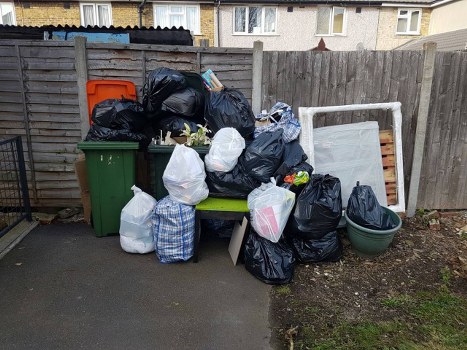 Purpose and scope: This policy sets out the health and safety expectations for all staff, contractors and visitors involved in office clearance and waste removal services within the service area. It applies to all phases of commercial and smaller-scale office clearances, from initial site assessment through to removal, transport and disposal of office waste. The aim is to minimise risk, prevent injury and protect property while delivering professional rubbish removal and office waste clearance services.
Core principles: Our approach is guided by risk-based planning, clear responsibilities, training and appropriate controls. All tasks must be planned, safe systems of work implemented and reviewed regularly. Employees must be empowered to stop work where hazards are uncontrolled and to report unsafe conditions without delay.
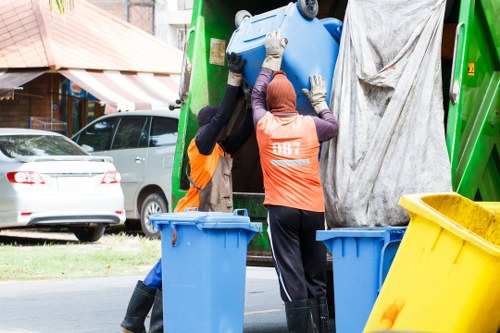 Key definitions: For the purposes of this policy, office clearance refers to the organised removal of furniture, fixtures, fittings, paper waste and general rubbish from commercial premises. Rubbish collection and waste removal include reuse, recycling and disposal stages. This distinction supports correct handling of mixed loads, hazardous items and confidential material.
Responsibilities
Management responsibilities: Senior management will ensure adequate resources, provide training and appoint competent supervisors to oversee clearance operations. Management must ensure risk assessments are completed, safe work method statements are in place and that vehicles and equipment are maintained in a safe condition.
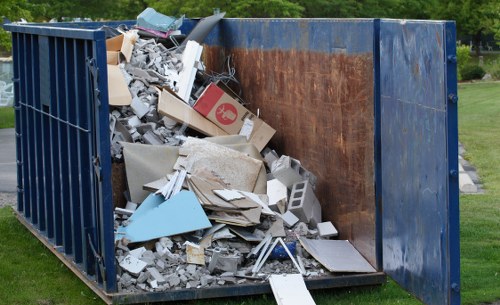 Employee responsibilities: Staff must follow safe systems of work, use issued personal protective equipment (PPE), attend required training and report hazards or incidents. Employees should practise safe manual handling, maintain good housekeeping and use mechanical aids where provided.
Contractors and sub-contractors engaged to assist with clearance work must comply with this policy, provide evidence of competence and share relevant safety information before starting on site.
Risk assessment, control measures and safe systems
All clearance operations require a documented risk assessment to identify hazards such as manual handling, slips, trips and falls, sharps or contaminated items, electrical risks and working at height. Controls will follow the hierarchy: elimination, substitution, engineering controls, administrative controls and PPE.
Practical controls include:
- Manual handling training and use of trolleys, lifting straps and team lifting for heavy items.
- Segregation of waste streams (recyclable, confidential, hazardous) and clear labelling.
- Site access management to avoid public exposure and to control vehicle movements.
- Safe handling and disposal procedures for hazardous or electronic waste.
- Provision and mandatory use of appropriate PPE such as gloves, hi-vis clothing and safety footwear.
Vehicles, equipment and site operations
Vehicles used for rubbish removal must be roadworthy, securely loaded and fitted with appropriate restraints. Drivers and loaders must ensure loads are stable, covered where necessary and that roadside loading follows traffic management rules. Equipment such as sack trucks, push trolleys and powered compactors must be inspected and used only by trained personnel.
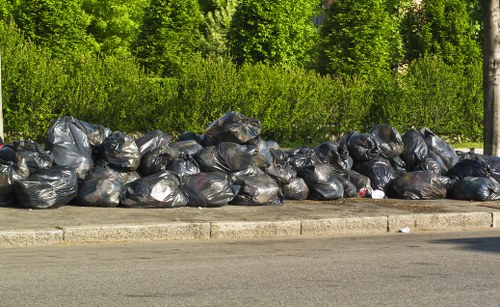 Working hours and environmental considerations: Work schedules should avoid peak public hours and respect noise limits. Waste management must aim for maximum reuse and recycling. Measures to prevent debris and dust migration from clearance sites include protective sheeting, regular cleaning and responsible disposal at licensed facilities.
Confidential materials: Confidential paper and data-bearing devices must be segregated on site, securely transported and treated in accordance with data protection controls. Staff must be briefed on handling protocols to prevent unauthorised access or data breaches.
Training, incident reporting and emergency procedures
 Training: Induction and ongoing training will cover manual handling, PPE, hazardous materials awareness, vehicle safety and site-specific risks. Competence will be assessed and records maintained. Refresher training should be scheduled at appropriate intervals or when procedures change.
Incident reporting and investigation: All accidents, near misses and unsafe conditions must be reported immediately, recorded and investigated. Root-cause analysis will be used to implement corrective actions and prevent recurrence. Lessons learned will be communicated across the team.
Emergency response: Emergency arrangements include first-aid provision, fire precautions and plans for evacuation or spill control. Employees will be trained in basic first aid and in the correct response to hazardous material exposure. External emergency services will be engaged where risks exceed on-site capability.
Monitoring, review and continual improvement
Health and safety performance will be monitored through routine inspections, audits and performance metrics such as incident rates and compliance checks. Corrective actions will be tracked to closure and reviewed for effectiveness. The policy and associated procedures will be reviewed at least annually or after significant incidents or operational changes.
Worker involvement: Staff participation is central to effective safety management. Regular toolbox talks, briefings and opportunities for employees to raise concerns or improvement ideas will be provided. Recognition of safe practice fosters a positive safety culture.
Commitment: This policy represents the organisation's commitment to protect people and the environment while delivering efficient office clearance and rubbish removal services. All personnel are expected to adhere to the policy and contribute to safer, cleaner workplace outcomes.
