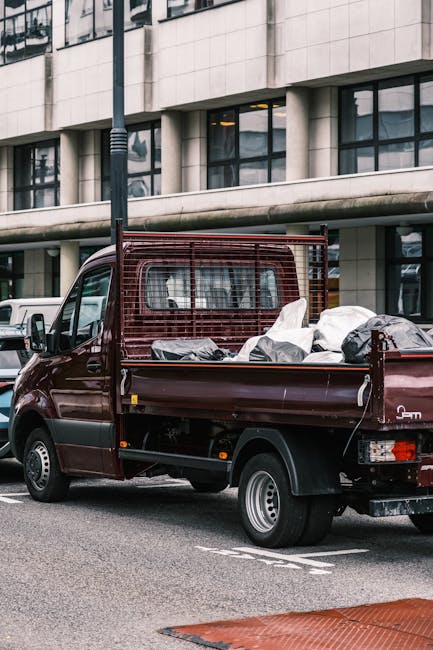
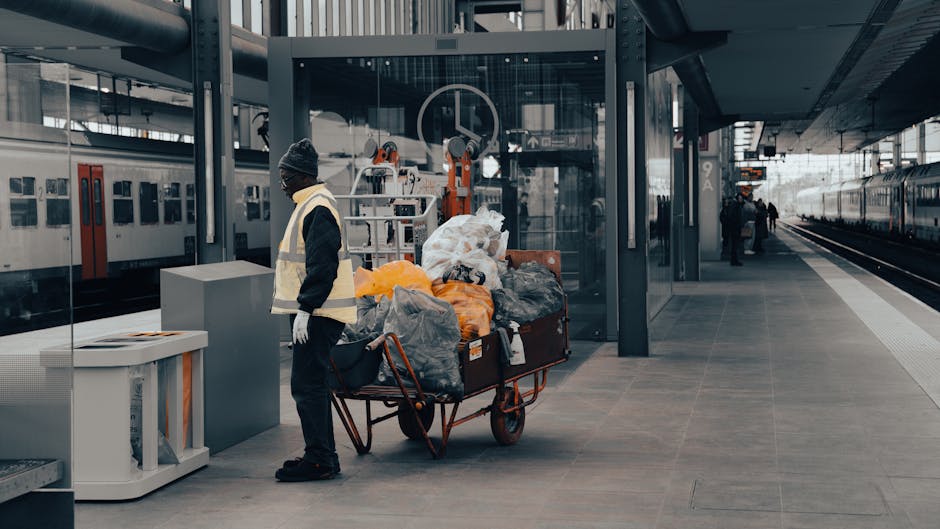
Bayswater rubbish removal near Queensway station made simple
If you are dealing with a cluttered flat, an office clear-out, a bulky sofa, or a pile of builders' waste near Queensway station, you probably want one thing: a straightforward solution that does not eat up your day. That is exactly what Bayswater rubbish removal near Queensway station made simple should feel like. No endless waiting around. No dragging bags through narrow hallways. No guesswork about what can go where. Just a clean, organised way to get rid of unwanted waste with as little fuss as possible.
In a busy part of West London, convenience matters. Traffic builds, parking is tight, and anyone who has tried to move a heavy wardrobe down a stairwell in a Bayswater mansion block knows the challenge already. This guide breaks down how local rubbish removal works, who it helps, what to watch out for, and how to make the whole process smoother from the start. You will also find practical steps, a comparison table, a checklist, and answers to the questions people ask most often. Simple, really. Or as simple as rubbish removal ever gets.
Why Bayswater rubbish removal near Queensway station made simple Matters
Location changes everything. Bayswater and the area around Queensway station bring a very specific set of problems: busy streets, limited loading space, older buildings, shared entrances, and the kind of staircases that somehow seem to get steeper when you are carrying something awkward. Add a few weather variables and a tight schedule, and a "quick clear-out" can stop being quick quite fast.
That is why a well-organised rubbish removal service matters. It is not just about lifting items into a van. It is about planning access, protecting communal areas, handling waste responsibly, and removing it without creating extra mess or stress. In practical terms, it saves time and avoids the common trap of half-finished clearing jobs that linger for days because nobody wants to deal with the last awkward bit.
There is also a trust factor. People often want to know that waste will be handled properly, that recyclable items will not be mixed with general rubbish, and that the job will be done with care. That is especially true in flats, managed properties, and commercial spaces where neighbours, landlords, or building managers may be watching how the clearance is carried out.
Expert summary: The best rubbish removal near Queensway station is not the fastest-looking option on paper. It is the one that fits local access, respects the property, and gets the waste out in one clean, efficient visit.
If you are also dealing with mixed household or commercial waste, it can help to look at broader waste removal options alongside specialist services such as flat clearance, home clearance, or office clearance. Choosing the right type of clearance from the start makes a real difference. Quite a big one, actually.
How Bayswater rubbish removal near Queensway station made simple Works
Most straightforward rubbish removal jobs follow a similar pattern, though the details depend on the property and the type of waste. The process usually starts with a description of what needs removing, where it is located, and how much access is available. That might sound obvious, but good early detail saves everyone time later.
For example, a second-floor flat on a narrow Bayswater street is very different from a ground-floor office near Queensway with rear access. One job might need careful timing around residents and parking. The other might be about clearing bulky desks, boxes, and packaging without interrupting the workday. Same service idea, different practical plan.
Once the scope is clear, the team can estimate what vehicle size, labour, and loading time may be needed. Then the removal itself is usually carried out in a tidy sequence: arrive, assess access, move items safely, load the waste, sweep up if needed, and transport everything away for sorting, recycling, or disposal.
For heavier items, mixed waste, or awkward furnishings, a good provider will normally think ahead about lifting routes and doorway protection. That matters more than most people realise. A scratched wall in an old building can become a much bigger issue than the rubbish itself. To be fair, nobody wants a clearance job that leaves behind a new problem.
When the waste includes old chairs, wardrobes, white goods, or office furniture, it may also be useful to consider dedicated services such as furniture clearance or furniture disposal. If the job involves renovation debris, builders waste clearance may be more appropriate. And if the mess has spilled into a garage, loft, or garden store, there are targeted options for those too.
What usually gets removed
- Household rubbish and general clutter
- Bulky furniture and broken furnishings
- Office equipment and old fixtures
- Renovation and construction debris
- Garage, loft, and storage waste
- Garden cuttings, bags, and outdoor waste
What makes the process smooth
- Clear item lists before arrival
- Accurate information about floors, lifts, and parking
- Simple access routes
- Items grouped by room or area
- Any fragile or restricted items flagged early
Key Benefits and Practical Advantages
There is a reason people search for rubbish removal near Queensway station rather than trying to tackle everything themselves. It is about more than avoiding hard work, though that is certainly part of it. A proper clearance service gives you speed, convenience, and a much lower chance of the job dragging on for longer than planned.
One major advantage is reduced disruption. If you live in a busy block, you probably do not want bags stacked by the door for a week while you figure out transport. If you run a small business, you definitely do not want old stock, packaging, or office waste sitting around and making the place feel cramped. The area starts to feel lighter once the clutter goes. You notice it immediately.
There is also the practical benefit of safety. Heavy items, broken glass, loose screws, sharp edges, damp cardboard, and awkward lifting all create avoidable risks. A managed removal reduces the chance of injury and the chance of damaging walls, floors, or communal spaces. That can be especially important in flats and shared buildings.
Another plus is better sorting. Good rubbish removal services do not just chuck everything together. They separate reusable, recyclable, and general waste where possible, and that supports better environmental practice. If sustainability matters to you, it is worth reading a provider's approach to recycling and sustainability. It is a sensible habit, and it tells you a lot about how they work.
| Benefit | Why it matters in Bayswater | What you notice |
|---|---|---|
| Time savings | Less waiting, fewer trips, less coordination | The job is finished in one visit or fewer visits |
| Safer handling | Useful for stairs, tight halls, and bulky waste | Less strain, fewer accidents, less damage |
| Better presentation | Important for landlords, tenants, and businesses | Rooms feel clearer and more usable |
| Responsible disposal | Helps with recycling and proper sorting | Less worry about where the waste ends up |
| Less stress | Ideal when you are already busy or moving | You can get on with the rest of your day |
Who This Is For and When It Makes Sense
This kind of service suits far more people than you might expect. Yes, it helps people moving out of a flat or clearing a house after a long build-up of belongings. But it also makes sense for landlords, letting agents, small businesses, landlords between tenancies, and anyone dealing with a sudden pile of unwanted items. Sometimes life just lands you with more stuff than you planned for. That is normal enough.
In Bayswater, many people live in flats or managed properties where moving heavy waste on your own is inconvenient at best and impossible at worst. If you are on an upper floor, or if the lift is small, or if parking near the building is a headache, professional help is often the most sensible route. No drama. Just a cleaner path forward.
It also makes sense when you are clearing specific spaces. A garage full of old tools and boxes. A loft with forgotten furniture. A garden corner packed with broken pots and branches. Or a home that needs a general reset before sale, rental, or refurbishment. In those cases, targeted services such as garage clearance, loft clearance, and garden clearance can be a better fit than a generic one-off tidy-up.
Businesses near Queensway station may need fast turnarounds too. A shop refit, an office downsizing, or a back-room tidy can quickly create waste that needs moving out before trading starts again. In that case, a service built around business waste removal is usually more practical than trying to make do with ad hoc trips.
Step-by-Step Guidance
If you want the process to feel easy, a bit of preparation goes a long way. Here is a sensible way to approach it without overthinking every detail.
- Sort the waste into obvious groups. Separate furniture, general rubbish, cardboard, garden waste, and anything that needs special care. Even rough sorting helps.
- Check access first. Think about stairs, lift size, parking restrictions, entry codes, and whether the waste is on a back patio, in a loft, or tucked in a storage cupboard.
- Make a simple item list. You do not need a museum catalogue. Just enough detail for someone to understand what they are collecting.
- Flag anything heavy, fragile, or awkward. Old wardrobes, broken mirrors, filing cabinets, and dismantled beds are the sort of things that need planning.
- Choose the right clearance type. A home clear-out is different from furniture disposal or builders' waste. Matching the job to the waste saves time and usually makes the price and schedule easier to understand.
- Confirm timing and access instructions. If the building has limited loading space or fixed collection windows, mention that early. It sounds basic, but this is where many avoidable delays happen.
- Prepare the space before arrival. Leave clear walkways if you can. Move small personal items aside. Keep keys, entry fobs, or codes ready.
- Walk through the job at the end. A quick final check makes sure nothing has been missed and that the space has been left tidy.
A small tip from experience: if an item looks too awkward to describe quickly, take a photo and use it as a reference for yourself when you are making arrangements. That tiny step saves a lot of back-and-forth. It really does.
Expert Tips for Better Results
The difference between a so-so clearance and a smooth one often comes down to the details. Here are the things that tend to help most.
- Be specific about access. A "ground-floor flat" and a "ground-floor flat with a narrow hallway and steps at the entrance" are not the same job.
- Group similar items together. Keep furniture in one area and loose bags in another where possible. It makes loading faster.
- Remove personal paperwork early. This matters for homes and offices alike. Receipts, letters, and files should not be left to chance.
- Ask how mixed waste is handled. A decent provider should be able to explain the general process in plain English.
- Use a service that matches the job. If it is mainly sofas and chairs, look at furniture clearance. If it is a full property reset, a more comprehensive house clearance or home clearance may be better.
- Plan around the building's rhythm. In shared properties, a quiet, efficient visit is much easier on everyone than a long one with multiple trips.
One more thing: if you are unsure whether to clear everything at once or split the job into smaller parts, ask yourself what is actually slowing you down. Is it volume, access, or just decision fatigue? Sometimes the rubbish is not the hardest part. It is the indecision. That sounds a bit cheeky, but it is true.
Common Mistakes to Avoid
Most problems with rubbish removal are avoidable. The tricky part is spotting them before they create hassle.
1. Underestimating how much waste there is. It is easy to look at a room and think the pile is smaller than it really is. Once items are lifted, stacked, and sorted, the volume changes fast.
2. Forgetting about access. Parking, loading, lift restrictions, and building rules can matter more than the waste itself. If access is awkward, a service needs to know that up front.
3. Mixing different waste types without mentioning it. Builders' debris, old furniture, and green waste may need different handling. If you keep that information vague, the plan can become messy.
4. Leaving personal or confidential items inside things to be removed. Filing cabinets, drawers, and boxes have a habit of hiding important papers. Check first. Then check again.
5. Choosing a service based only on the cheapest number. Cheap can be fine, but only if the service fits the job. The wrong fit often costs more in time, frustration, or repeat visits.
6. Not asking about preparation. Some clearances need items ready near the exit, while others can be handled room by room. It helps to know what is expected.
Tools, Resources and Recommendations
You do not need a pile of specialist equipment to prepare for a clearance, but a few simple tools make everything easier. A marker pen for labelling bags. Strong boxes for loose items. Thick gloves if you are sorting sharp or dusty material. Maybe a torch for lofts or dark cupboards. Nothing fancy. Just practical.
If you are managing a larger project, especially a house move or refurbishment, it can also help to keep a basic room-by-room list. Kitchen, bedroom, storage, hallway, garden. Tick as you go. That one habit can prevent the classic "where did this extra pile come from?" moment that always appears at the end of the day.
For customers who want clearer pricing expectations, the page on pricing and quotes is a useful place to understand how quotes are typically approached. If you are comparing service trust signals, pages such as about us, insurance and safety, and health and safety policy can help you judge whether a provider takes the work seriously.
For more formal reassurance about service standards, also look at payment and security and complaints procedure. These are not glamorous pages, no, but they do show how a business handles the parts that matter when something needs to go right.
Law, Compliance, Standards, or Best Practice
Rubbish removal in the UK is not just about lifting things out of a property. It also sits within a wider duty to handle waste responsibly. In plain terms, you want to know that waste is collected, transported, and processed in a way that fits accepted practice. That means using a provider that treats sorting, safety, and disposal properly, rather than cutting corners.
For households and businesses in Bayswater, a sensible approach is to check that the company communicates clearly about what it takes, what it cannot take, and how it manages different waste streams. If you are clearing an office or a business property, it is especially wise to think carefully about confidential documents, electrical items, and anything that should not simply be mixed into general waste.
There is also the practical side of building rules and neighbour relations. In flats and managed buildings, access arrangements matter. Waste left in communal areas can become a nuisance very quickly. Best practice is to keep paths clear, avoid damage to shared space, and make sure the removal is completed cleanly rather than left half-done.
Where disposal involves items with a recycling potential, it is good practice to separate them as far as possible and to ask how the provider handles reusable or recyclable materials. If a company has a clear recycling and sustainability approach, that is usually a positive sign.
Options, Methods, or Comparison Table
Different rubbish removal approaches suit different situations. The right choice depends on the type of waste, the location, and how quickly you need the job finished.
| Option | Best for | Pros | Watch out for |
|---|---|---|---|
| General waste removal | Mixed household or business rubbish | Flexible and simple | May not suit bulky or specialist waste |
| Flat clearance | Flats, apartments, and shared buildings | Good for access-aware removals | Needs accurate floor and entry details |
| House or home clearance | Whole-property or multi-room jobs | Efficient for larger volumes | Can take more planning |
| Furniture disposal | Sofas, beds, tables, wardrobes | Good for bulky single items | May need lifting help or dismantling |
| Builders' waste clearance | Renovation debris and construction offcuts | Handles messy, heavy waste | Requires clear waste-type detail |
| Business waste removal | Offices, shops, storage rooms | Minimises disruption to work | May involve timing constraints |
In some cases, the best answer is a mixed approach. A flat might need furniture clearance, plus general waste removal, plus a final sweep of one storage cupboard. That is normal enough. The key is matching the service to the actual job rather than forcing everything into one label.
Case Study or Real-World Example
Picture a typical Bayswater scenario. A tenant is moving out of a first-floor flat near Queensway station. The flat has a broken bed frame, two worn armchairs, cardboard from new purchases, and a few bags of unwanted household items. The hallway is narrow. There is one small lift, but it is already used by neighbours and shopping trolleys at busy times. Parking outside is limited, and the building manager wants the common areas kept clear.
Now compare two possible approaches.
The first is a DIY attempt. The tenant rents a van, asks a friend to help, tries to time the collection around work, and spends the morning shuttling items out in bits. By lunchtime, one chair is in the lift lobby, the bed frame has snagged on the corner, and the cardboard still has not moved. Not ideal.
The second approach is a planned clearance. The items are listed in advance, access is explained clearly, and the waste is grouped by type before the team arrives. The removal is done in one clean visit, the space is left tidy, and the tenant can focus on the move-out inspection rather than the rubbish. That is the whole point, really.
It is not a dramatic story. It is just the kind of practical difference people notice when the job is handled properly. Less noise, less waiting, fewer surprises. And in a place like Bayswater, that matters.
Practical Checklist
Use this quick checklist before your rubbish removal booking. It keeps things simple.
- Make a clear list of items to remove
- Separate furniture, general rubbish, and special waste if possible
- Check stairs, lifts, parking, and entry details
- Measure any bulky items that may be awkward
- Remove personal papers, valuables, and fragile items
- Group items near the exit where practical
- Tell the provider about access restrictions
- Confirm whether the job is a flat clearance, home clearance, office clearance, or waste removal job
- Ask about recycling and disposal handling
- Keep the final walkthrough simple but thorough
If you are dealing with more than one area of the property, it can be helpful to read up on related services like house clearance or office clearance so you can choose the right scope from the start.
Conclusion
Bayswater rubbish removal near Queensway station made simple is really about one thing: reducing friction. The fewer surprises you have around access, item type, timing, and disposal, the easier the whole process becomes. That is true whether you are clearing a flat, a family home, an office, a garage, or a pile of renovation waste that has outstayed its welcome.
The best results usually come from a bit of preparation, a clear explanation of what needs removing, and a service that understands the realities of busy local streets and shared buildings. When those pieces come together, the job feels almost refreshingly ordinary. Which, let's be honest, is exactly what you want from rubbish removal.
If you are ready to take the next step, choose the service that fits your space and your waste, keep the details simple, and make the process work around your day rather than the other way around. A tidy space has a way of calming the mind. Funny how that happens.
Get a free quote today and see how much you can save.
Frequently Asked Questions
What does rubbish removal near Queensway station usually include?
It usually includes the collection and removal of general household waste, bulky items, mixed rubbish, and sometimes furniture or office waste, depending on the service you choose.
Is this service suitable for flats in Bayswater?
Yes. In fact, it is often most useful for flats because access, stairs, lifts, and communal areas can make DIY removal awkward or slow.
How should I prepare before the team arrives?
Make a simple item list, clear access routes where possible, separate obvious waste types, and tell the provider about parking or entry restrictions.
Can I book rubbish removal for just one or two bulky items?
Yes, that is common. A sofa, bed, wardrobe, or broken table can often be collected without needing a full clearance.
What is the difference between rubbish removal and house clearance?
Rubbish removal usually covers mixed unwanted waste, while house clearance is broader and better suited to clearing several rooms or an entire property.
Do I need to sort recycling before collection?
It helps to do some basic sorting, but you usually do not need to overcomplicate it. A good provider should be able to advise how items are handled.
Is office waste handled differently from domestic rubbish?
Often, yes. Office waste may include paperwork, electronics, desks, chairs, or storage items, so it is worth using a service that understands business waste removal.
What if my building has difficult access or no parking?
Tell the provider in advance. This is one of the most important details, especially near busy stations and in older Bayswater buildings.
Can builders' debris be removed with general rubbish?
Sometimes mixed waste can be collected together, but heavy or construction-related material may be better handled through builders waste clearance.
How do I know if a clearance service is trustworthy?
Look for clear information about pricing, safety, insurance, payment, complaints, and sustainability. Straight answers are a good sign. So is a provider that asks sensible questions before quoting.
What should I do with furniture I no longer want?
Furniture can often be removed through furniture clearance or furniture disposal, depending on the item type and condition.
Why is local knowledge important for Bayswater and Queensway station?
Because local access, road conditions, parking limits, and shared-building layouts can affect how smoothly the collection goes. A team that understands the area is usually better prepared.